State Bitcoin Reserves Pass 460K Globally

🪙 State Bitcoin reserves now exceed 460,000 BTC globally, marking a turning point in how nations view and use cryptocurrencies as strategic assets.
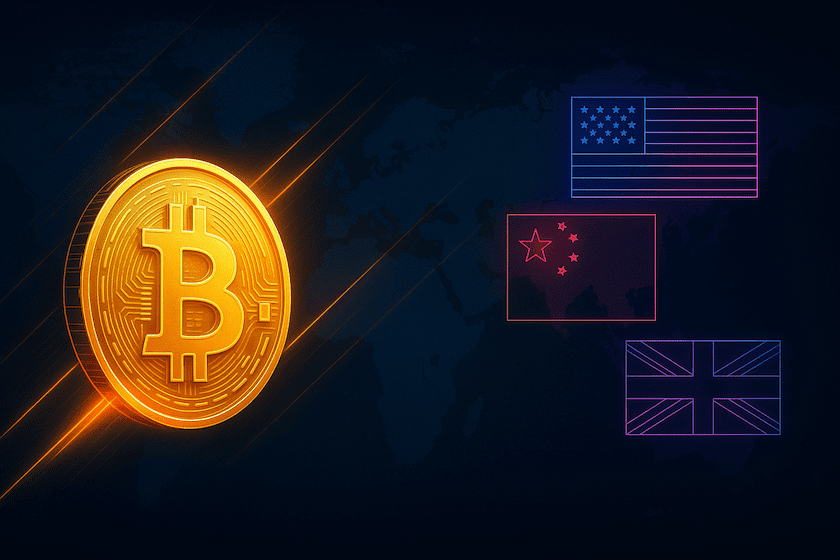 🌍 As of mid-2025, governments worldwide collectively hold over 460,000 BTC, equivalent to about 2.3% of Bitcoin’s total supply. This milestone underscores how state Bitcoin reserves have become a cornerstone of national strategies — no longer just a niche for tech enthusiasts and investors. The data, drawn from blockchain records and legal disclosures, confirms that Bitcoin is now firmly entrenched in the global financial system.
🇺🇸 The United States leads the global tally, boasting nearly 200,000 BTC. Much of this came through criminal seizures, but unlike prior administrations, the Trump government has consolidated these holdings under an official Strategic Bitcoin Reserve. This move highlights the growing seriousness with which Washington treats state Bitcoin reserves, acknowledging their potential role in economic security and influence.
🇨🇳 Close behind, China holds about 190,000 BTC, mainly seized from the PlusToken scam. However, the fate of much of this cache remains opaque, with authorities revealing little. Yet even amidst such ambiguity, China’s participation in building state Bitcoin reserves signals its awareness of Bitcoin’s value in future monetary policy and global trade.
🏔️ Meanwhile, Bhutan is a surprising contender in the state Bitcoin reserves story. By leveraging its abundant hydropower to mine Bitcoin sustainably, Bhutan has reportedly amassed up to 13,000 BTC — worth over $1 billion. Remarkably, this sum represents more than a third of the nation’s GDP, making Bitcoin a significant economic pillar for this small Himalayan kingdom.
🇬🇧 The UK also plays a notable role, holding around 61,000 BTC from a money-laundering investigation. Ukraine famously used Bitcoin donations to fund wartime efforts, while Iran mandates licensed miners to deliver their Bitcoin directly to the central bank. Each of these approaches contributes to the evolving tapestry of state Bitcoin reserves, showcasing diverse strategies for integrating cryptocurrency into national interests.
🤫 Not all governments are transparent about their positions. El Salvador has been vocal, adopting Bitcoin as legal tender and publicizing its purchases. Yet, there are rumours — though unconfirmed — about state Bitcoin reserves being quietly built in nations like the UAE and Bulgaria. This silence adds an intriguing layer to the narrative, as some states prefer discretion while still recognizing Bitcoin’s strategic utility.
🔗 What’s undeniable is that the trend is accelerating. As governments move from skepticism to action, state Bitcoin reserves are redefining how decentralized money fits into geopolitics. Whether through loud declarations or quiet accumulation, nations are now active players in shaping Bitcoin’s future, treating it as more than just an investment — but as a reserve asset of strategic importance.